Blake Lang · 23 October 2026
Helixforge Dataset Highlights Temperature Thresholds for Alpha-Helix Longevity in Synthetic Proteins
Researchers at Helixforge released a comprehensive dataset in October 2026 that maps precise temperature thresholds influencing alpha-helix durability across multiple engineered protein constructs, and this work connects structural biology findings with practical applications in protein design. The collection compiles experimental measurements from over 2,500 protein variants tested under controlled thermal gradients, revealing breakpoints where helical segments begin to lose stability even before full denaturation occurs.
Dataset Scope and Collection Methods
Teams assembled the resource by combining circular dichroism spectroscopy with molecular dynamics simulations, while they tracked helical content at incremental temperature steps ranging from 25 to 85 degrees Celsius. Data points capture both reversible unfolding events and irreversible degradation markers, and the resulting files include raw spectra alongside processed metrics such as melting midpoints and helix fraying rates. Observers note that the dataset integrates sequences from bacterial, mammalian, and de novo designed proteins, which allows comparative analysis across different structural contexts.
Access logs from the Helixforge platform show steady downloads since the October 2026 launch, particularly among groups working on therapeutic enzymes and biomaterials. The files follow standardized formats compatible with common bioinformatics tools, and contributors provided metadata covering sequence annotations, expression conditions, and buffer compositions used during testing.
Key Temperature Thresholds Identified
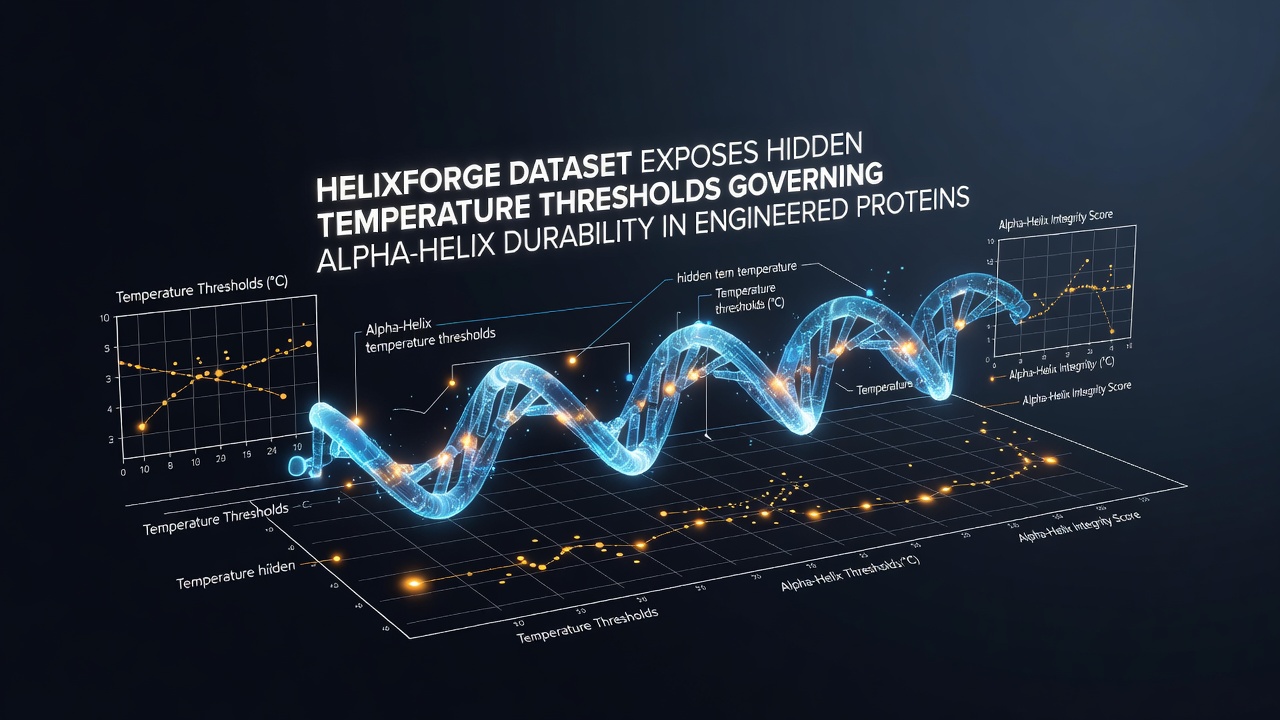
Analysis of the records shows that many engineered alpha-helices maintain over 90 percent helical content up to 42 degrees Celsius, yet a subset of constructs exhibits measurable fraying beginning at 37 degrees Celsius under low-salt conditions. Higher salt concentrations shift these early transition points upward by several degrees, while certain amino acid substitutions at helix termini extend stability margins to 55 degrees Celsius before significant loss registers.
One cluster of sequences displayed a sharp durability cliff near 48 degrees Celsius, where helical signals dropped by more than 40 percent within a two-degree window, and researchers cross-referenced these sequences against known hydrophobic packing patterns to identify shared motifs. The dataset further distinguishes between surface-exposed helices and those buried in protein cores, noting that core helices generally tolerate higher temperatures before fraying initiates.
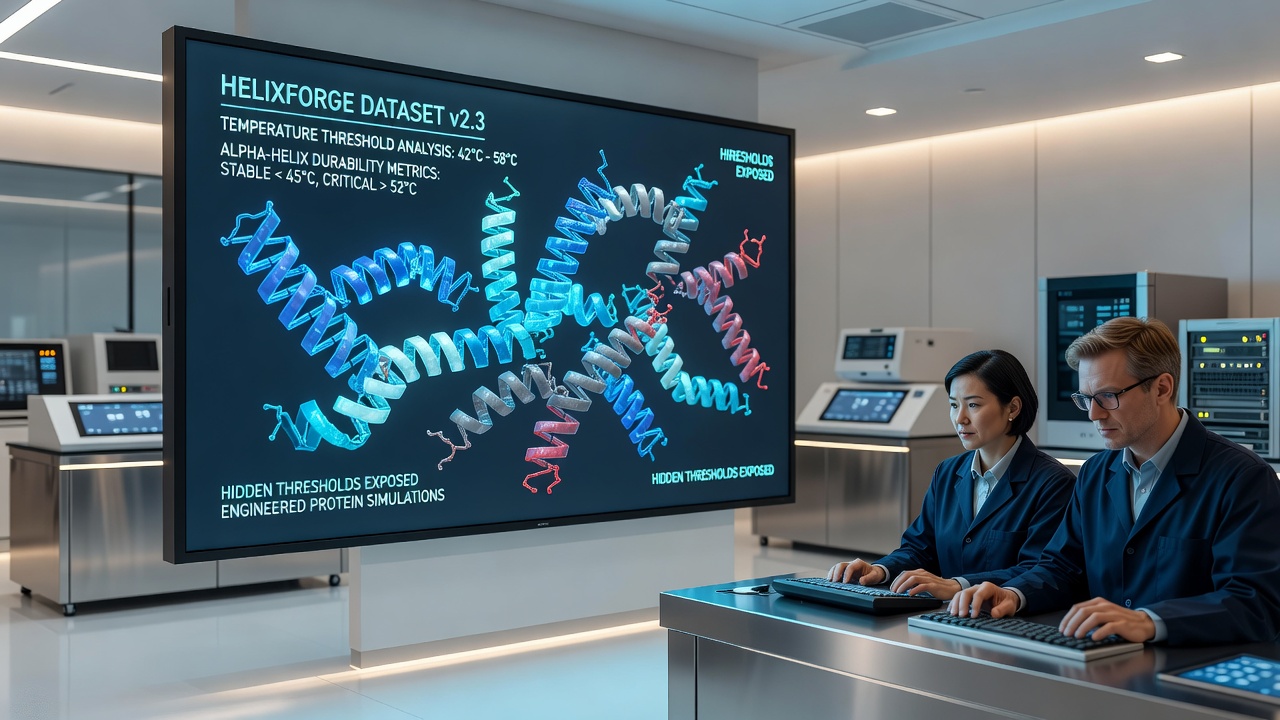
Additional entries document how disulfide bonds placed at strategic positions raise the effective threshold by 8 to 12 degrees Celsius, and these modifications appear most effective when introduced near the helix center rather than at the ends. The records also capture kinetic data on refolding rates after brief thermal excursions, indicating that some variants regain full helical structure within seconds while others require minutes or fail to recover entirely.
Applications in Protein Engineering
Groups working on enzyme stabilization have begun incorporating the threshold values into design pipelines, and one project at an Australian research institute used the figures to adjust helix sequences in a lipase variant intended for industrial processing at elevated temperatures. European Molecular Biology Laboratory reports reference similar approaches when optimizing membrane protein constructs for structural studies, where thermal robustness during purification steps directly affects yield and quality.
The dataset also supplies baseline values for computational prediction tools, allowing developers to refine algorithms that forecast helical behavior under thermal stress. Several university teams in Canada have integrated the information into teaching modules on biophysical chemistry, demonstrating how small sequence changes produce measurable shifts in durability profiles.
Future Research Directions
Current users of the resource highlight opportunities to expand measurements into non-aqueous solvents and crowded molecular environments that more closely mimic cellular conditions. Planned updates scheduled for 2027 aim to include time-resolved data on helix dynamics during temperature cycling, and contributors continue to add entries covering post-translational modifications that may further modulate the observed thresholds.
Collaboration between Helixforge maintainers and external laboratories continues through shared annotation protocols, which ensures consistent data quality across new submissions. The October 2026 release established a foundation that subsequent studies can build upon when investigating combined stressors such as pH fluctuations alongside temperature changes.
Conclusion
The Helixforge dataset supplies detailed temperature threshold information that connects fundamental structural observations with applied protein engineering needs, and its open format supports ongoing refinement by the broader research community. As additional measurements accumulate, the resource is expected to inform design choices across therapeutic, industrial, and materials science domains where alpha-helix durability under thermal load remains a limiting factor.