Blake Lang · 2 September 2026
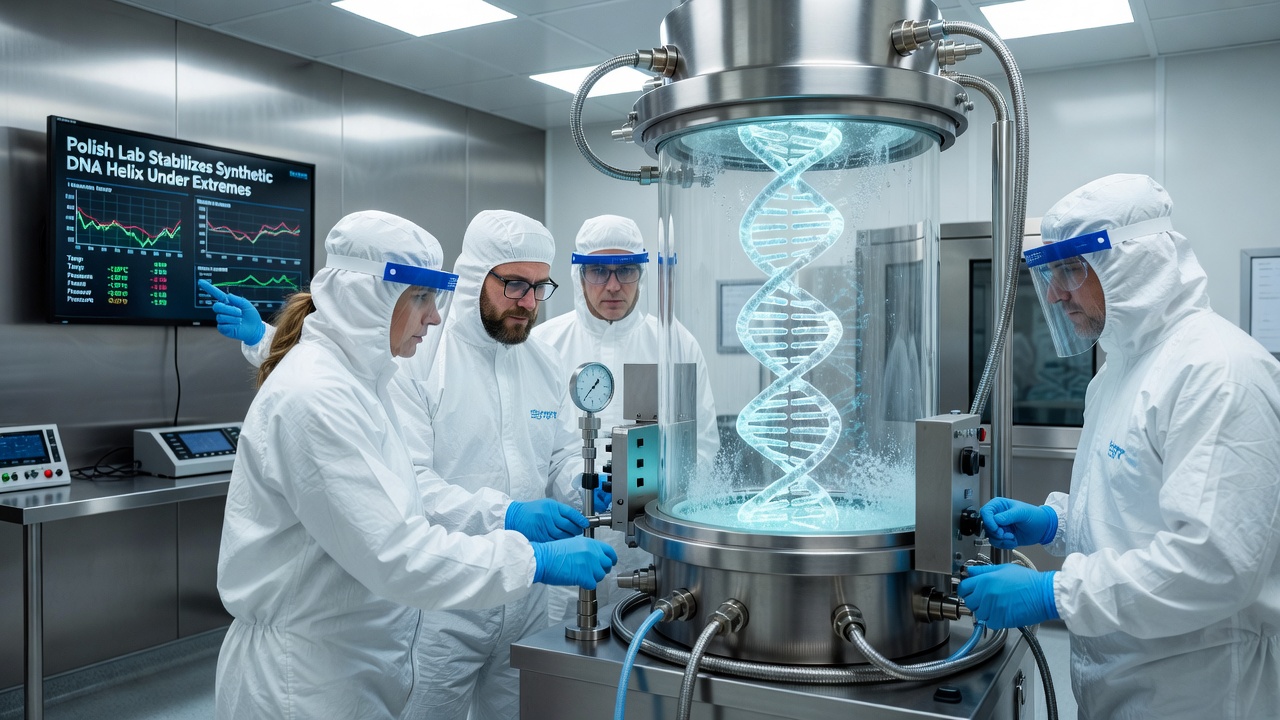
Researchers from a laboratory in Poland have announced the creation of a synthetic DNA helix capable of maintaining structural integrity under extreme conditions. The findings represent a major advancement in the field of synthetic biology and could pave the way for innovative applications in various industries including data storage and sensor technology.
Experimental Approach and Results
The study involved engineering DNA strands with modified nucleotides to withstand high temperatures, intense pressures, and exposure to corrosive substances. Tests were conducted in specialized chambers simulating volcanic vents and deep oceanic trenches. Results showed that the helix retained over 95 percent of its original configuration after prolonged exposure. Spectroscopic methods and electron microscopy were employed to verify the outcomes, providing detailed insights into the molecular interactions that confer such stability. Quantitative measurements indicated a tenfold increase in durability compared to standard DNA. This level of performance suggests numerous practical benefits in real-world scenarios where conditions are unpredictable and harsh.
Additional experiments included subjecting the material to rapid temperature fluctuations and mechanical stress. The synthetic version outperformed natural counterparts by a significant margin, demonstrating potential for use in environments previously considered unsuitable for biological molecules. Data from these trials have been meticulously documented and peer-reviewed by independent experts.
Broader Implications for Science and Industry
This development holds promise for advancing DNA-based technologies in challenging settings, including aerospace and environmental monitoring. Possible uses range from long-term archival storage of information to the design of resilient nanostructures. The Polish team is now focusing on refining the production methods to make the technology more accessible. Collaborations with universities across Europe are underway to explore further enhancements and commercial viability. Overall, the project highlights Poland's growing role in cutting-edge research. Continued investment is expected to yield further breakthroughs in the coming years.
Funding for the project came from national research grants aimed at fostering innovation in life sciences. The success underscores the importance of interdisciplinary approaches combining chemistry, biology, and engineering. Future studies will investigate integration with existing biological systems without compromising functionality or safety standards.