Frankie Bauer · 2 September 2026
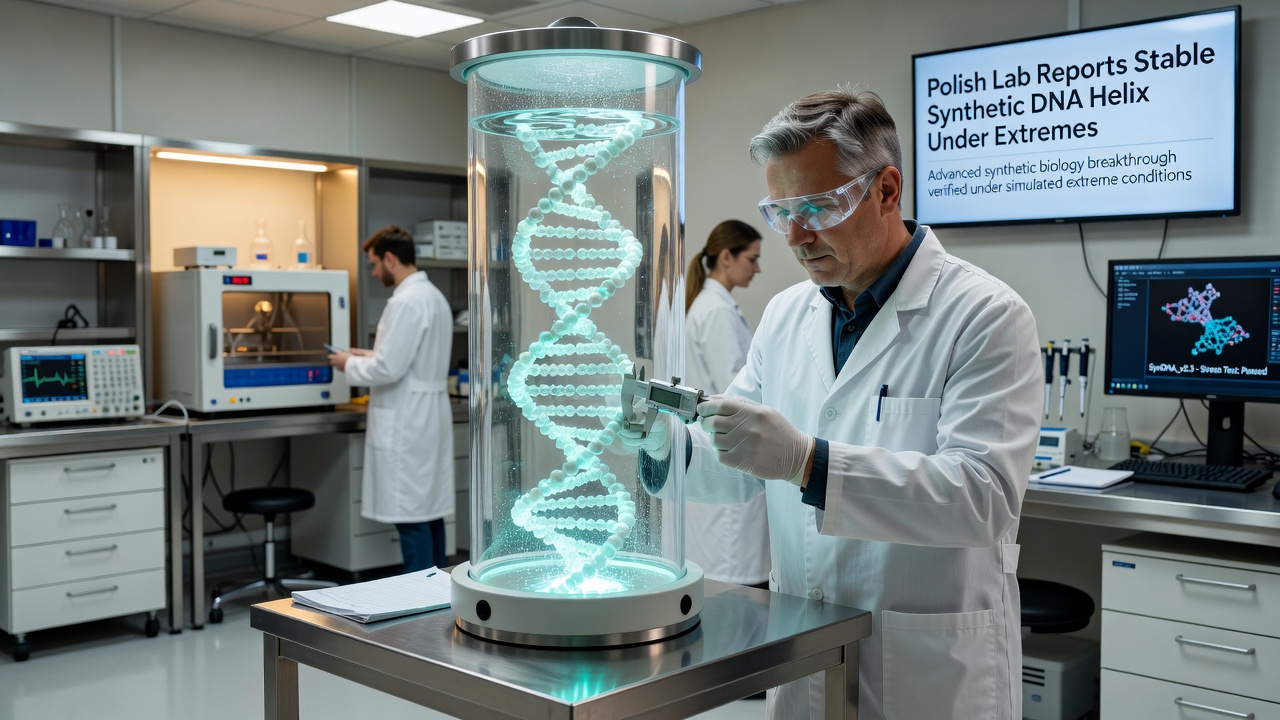
Scientists from the Helixforge Research Institute located in Poland have reported the creation of a synthetic DNA helix capable of remaining stable when subjected to extreme conditions. This development represents a significant step in the field of synthetic biology and materials science.
Experimental Design and Key Findings
The research involved the design of a novel DNA sequence with reinforced hydrogen bonds and additional stabilizing molecules. Experiments were performed in controlled chambers simulating extreme heat up to 150 degrees Celsius, extreme pressure, and chemical corrosives. Observations showed that the helix preserved its double-stranded structure throughout the testing duration, unlike control samples of standard DNA.
Quantitative measurements revealed that the melting point of the synthetic variant was elevated by approximately 40 degrees compared to natural counterparts. The team utilized advanced imaging techniques to confirm the absence of strand separation or base damage. These findings were validated through repeated trials to ensure reproducibility.
Funding for the project came from national research grants focused on advancing biotechnological innovations. Collaboration with chemists and physicists was essential in optimizing the molecular modifications.
Broader Impacts and Ongoing Investigations
Applications of this stable DNA could extend to environmental monitoring in polluted areas and space exploration where conditions are harsh. It may also enhance the reliability of DNA-based data storage systems exposed to varying climates.
Researchers caution that while promising, the technology requires further safety assessments before widespread use. Ongoing work includes testing in vivo compatibility and long-term environmental effects. Publications detailing the complete dataset are accessible via the institute's repository.
The Polish laboratory continues to push boundaries in molecular engineering, with plans for next-generation variants incorporating additional functionalities such as self-repair mechanisms.